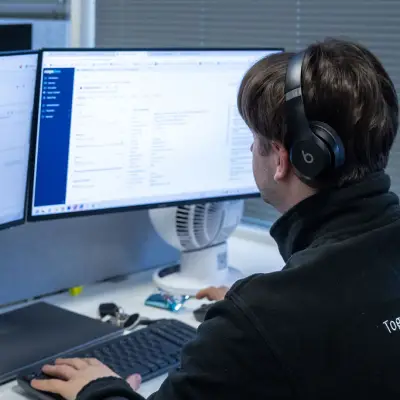
When every alert used to matter
There was probably a time when every security alert got your full attention.
Something showed up in the console, you looked into it, figured out what had happened, and moved on.
Over time, that changes.
Once you’ve seen the same warning for the fiftieth time, and it’s been harmless every time before, your brain starts to treat it differently.
You still check it.
Just not with the same urgency.
Why monitoring gets noisier
Most monitoring tools get louder as your environment grows.
New platforms arrive with their own alerts, existing tools gain new features, and hardly anything gets switched off along the way.
Before long, hundreds of notifications are fighting for the same attention.
Some of them deserve it. Plenty don’t.
The trouble is, they all look much the same when they land. That makes it hard to tell what matters without stopping to investigate each one.
Monitoring isn’t set and forget
Monitoring isn’t something you configure once and leave alone.
As your environment changes, your monitoring needs to keep up.
If it doesn’t, the volume creeps up until the alerts that really matter are competing with everything else on the screen.
Making time to fine-tune it is the hard part.
It rarely makes it above project work, support tickets or whatever operational issue turned up this morning.
So the alerts keep coming and the dashboards keep filling up.
Your team learns which notifications they can probably skip, because experience says nothing will come of them.
And that’s where the risk starts to build.
Making time to get it right
Improving your monitoring usually means taking time away from something else.
With co-managed IT support, it doesn’t have to.
When more of the day-to-day operational work is shared, your team has room to review the systems they rely on every day. That includes the monitoring that’s there to help you catch problems before they turn into incidents.
Every alert is asking someone to make a decision.
The fewer unnecessary alerts you get, the easier those decisions become.
If you’d like to see how co-managed IT support could free up time for work like this, let’s talk. Get in touch with the 1-Fix team.